Do You Actually Need an Electrolyte Drink Every Day?
Quick Answer: If you eat normal meals, an electrolyte drink on an ordinary desk-and-errands day is optional flavoring, not necessary hydration — food supplies several times the sodium and potassium a routine day loses. The drinks earn their place in specific situations: sweaty sessions over about an hour, hot outdoor days, heavy sweaters and salty sweaters, illness with fluid loss, very low-carb eating, and jobs done in heat. Daily habitual use is mostly harmless for healthy people but adds sodium some people should watch, plus sugar or sweeteners depending on the packet.
Your kidneys have managed this balance for your whole life. The packet is a situational assistant, not a daily employee.

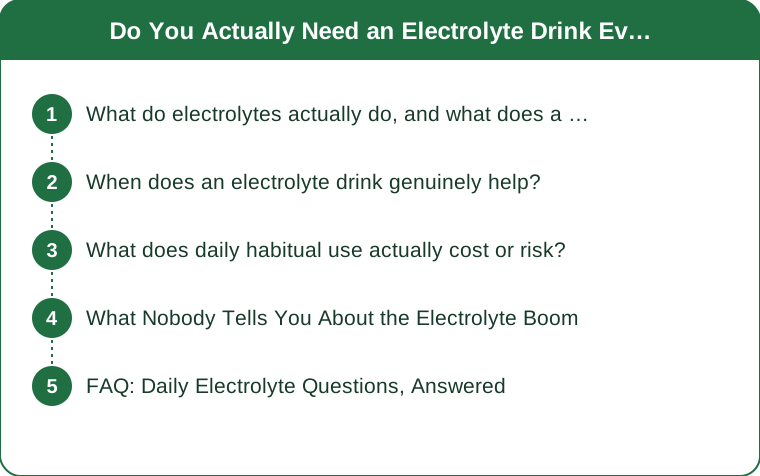
What do electrolytes actually do, and what does a normal day cost you?
They run your nerves, muscles, and fluid balance — and a normal day barely dents the account.
Electrolytes are charged minerals — sodium, potassium, magnesium, calcium, chloride — that keep fluid distributed correctly between your blood and cells, carry the electrical signals your nerves and heart run on, and let muscles contract and release on command. They are genuinely vital, which is exactly what makes them marketable.
A typical American day replaces them several times over at the table. Average sodium intake in the US runs around 3,400 milligrams daily — well above the roughly 1,500 to 2,300 that guidelines target — while a sedentary day’s sweat losses are a small fraction of that. Potassium and magnesium come along in produce, dairy, beans, nuts, and grains. For a person eating meals, the daily electrolyte budget is funded before the first packet is opened.
Your kidneys are the actual regulation system. They adjust retention and excretion hour by hour, holding blood levels steady across wildly different intakes. The tightness of that control is why electrolyte drinks feel good without being needed: the flavor and the ritual are real; the physiological rescue usually is not.
Where real losses happen is sweat — and sweat varies enormously. An hour of hard, hot exercise can cost anywhere from several hundred to over a thousand milligrams of sodium depending on your sweat rate and saltiness — the white-crusted-hat people genuinely lose more. That variation, not the calendar, is what decides whether a drink is doing a job.
When does an electrolyte drink genuinely help?
In the sweaty, the sick, the hot, and a few dietary corners. This is the honest use-case list.
Exercise past about 60 to 90 minutes, especially in heat. For long runs, rides, hikes, hot-yoga blocks, and tournament days, sodium plus fluid maintains blood volume and performance in ways plain water cannot — and during long efforts, the carbohydrate in a classic sports drink is a feature doing its own job. Under an hour at moderate effort, water covers nearly everyone.
Heavy or salty sweaters, at shorter durations too. If your gear dries with white rings and cramping has a history with you, earlier sodium is a reasonable personal adjustment — sweat saltiness is partly built-in, and the crust is your data.
Hot outdoor days and hot outdoor jobs. Landscaping in August, a beach day with sports, a long humid walk commute — occupational and recreational heat loss counts the same as gym loss.
Illness with fluid losses. Vomiting and diarrhea are the textbook case — it is why oral rehydration solutions exist in medicine. Same logic, medical-grade version, and a doctor when it is more than a day or involves a small child.
Very low-carb and fasting patterns. Early keto famously flushes sodium and water; part of the keto flu responds to deliberate electrolytes, which is why the community leans on them.
Alcohol recovery, modestly. Fluid plus some sodium the morning after helps the rehydration part of the problem — the packet is not a hangover cure, but it is a reasonable delivery vehicle for the water you need anyway.
Pregnancy, medications, and medical conditions sit outside DIY territory: diuretics, blood-pressure treatment, kidney and heart conditions all change the math in both directions. That is a pharmacist-or-doctor conversation, not a flavor choice.

What does daily habitual use actually cost or risk?
For most healthy people: money, sweetener, and unneeded sodium. For some people: numbers that matter.
The sodium adds up against a high baseline. Typical packets carry a few hundred to over a thousand milligrams. Stacked on the ~3,400 most Americans already eat, a daily high-sodium packet pushes further above targets — irrelevant to a marathoner in July, relevant to anyone tracking blood pressure. Salt-sensitive individuals and anyone advised to limit sodium should treat high-dose packets as situational tools only.
The sweet load depends entirely on the product. Classic sports drinks carry real sugar — purposeful mid-exercise fuel, plain liquid candy at a desk. Sugar-free versions swap in sweeteners, fine for most but worth an honest look at the label if packets have become a multiple-a-day flavor habit.
Water flavored into being drunk is the legitimate defense of daily use. If a light electrolyte packet is the difference between drinking water and not, that behavioral win can outweigh the ingredient math — a half-dose packet or heavy dilution captures the flavor benefit at a fraction of the load.
Overdoing water plus underdoing sodium is the reverse failure worth knowing. Drinking very large volumes of plain water during long sweaty events can dilute blood sodium — the rare but serious endurance-event problem — which is precisely where electrolyte drinks are not optional. The tool is excellent; the calendar-based prescription is what this article is pushing back on.
The cheap self-audit: urine running pale through the day, no cramping pattern, sessions under an hour, normal meals — you are funded, and the packet is entertainment. Long hot efforts, white-crusted gear, a physical job in heat — you have real use cases, and the packet is equipment.
This is general information, not medical advice. Blood pressure, kidney, and heart conditions, or any prescription that touches fluid balance, mean personalized guidance wins over any packet’s label.
What Nobody Tells You About the Electrolyte Boom
Thirst plus food is a functioning system. The quiet truth under the category: for ordinary days, drinking when thirsty and eating normal meals maintains electrolyte balance without assistance. The packets industry grew around exercise science that applies beautifully to two-hour efforts — and then marketed itself into breakfast.
Caffeine is not meaningfully dehydrating at normal doses. The coffee-cancels-water arithmetic that sells morning packets does not survive the research; habitual coffee and tea count toward fluid intake. Your morning already hydrates you.
The salty-sweater thing is real and visible. Sweat sodium concentration varies severalfold between people. White residue on dark leggings and hat brims is a legitimate signal you sit at the losing end — the one group that benefits from sodium earlier and more often than the averages suggest.
Color is doing some of the heavy lifting. Part of the daily-packet appeal is ritual: the fizz, the flavor, the sense of doing something. Nothing wrong with ritual — just notice when you are paying supplement prices for what is functionally a beverage.
Magnesium in packets is mostly a passenger. Doses are usually small, and the forms vary in absorption; anyone chasing magnesium for sleep or cramps on real grounds is better served looking at food and dedicated dosing with a professional than at a hydration packet’s trace amount.
Sports drinks and electrolyte powders are different tools. Sugared sports drinks are in-exercise fuel-plus-fluid; low-sugar powders are fluid-plus-sodium. Using each where it belongs beats brand loyalty in either direction.
FAQ: Daily Electrolyte Questions, Answered
Is it bad to drink electrolytes every day if I’m healthy?
Usually not harmful — kidneys handle the excess — but for most desk-day routines it adds sodium and sweetener without adding function. Keep the habit if it makes you drink water; consider half doses, and skip high-sodium packets if blood pressure is a topic in your life.
How do I know if I’m someone who actually needs them?
Look for the use cases: sweaty sessions over an hour, hot outdoor days or jobs, white salt residue on gear, a cramping history, illness, or very low-carb eating. Absent those, pale-ish urine and normal meals mean you are already covered.
Water or electrolyte drink during a 45-minute workout?
Water, for almost everyone at moderate intensity. The exception is aggressive sweaters in hot rooms — hot yoga veterans know who they are — where a light electrolyte mix is a reasonable comfort-and-cramp play.
Are the sugar-free electrolyte powders better than sports drinks?
Different jobs. Mid-run and mid-ride, a classic sports drink’s sugar is functional fuel. At a desk or for post-sweat replacement without calories, low-sugar powders fit better. The worst fit is the full-sugar sports drink as an all-day desk beverage.
TL;DR:
- Normal meals fund your electrolyte budget several times over; ordinary days need water, not packets.
- Real use cases: sweaty efforts past about an hour, heat, salty sweaters, illness, very low-carb eating, and hot outdoor work.
- Daily habitual use is mostly harmless but stacks sodium on an already-high American baseline — relevant if blood pressure is in your story.
- If flavor is what makes you drink water, dilute or half-dose and call it a win; match sugared sports drinks to long efforts only.
Audit one week: note which days you sweated over an hour. That number — not the subscription — is how many packets the week actually called for.
Keep Reading
This article is for general informational purposes only and is not medical advice. Always consult a qualified health professional for guidance specific to you.