Do Protein-Infused Wellness Drinks Actually Deliver, or Is It Mostly Marketing?
Quick Answer: Protein-infused wellness drinks can genuinely help hit daily protein targets conveniently, but the actual protein amount and quality varies enormously between products, so checking the grams-per-serving and protein source (whey, collagen, plant-based) matters far more than the trendy branding on the front of the bottle.
Protein has quietly become the ingredient every wellness drink wants to claim, from clear protein waters to protein-boosted matcha lattes. Some of these genuinely deliver meaningful protein; others have just enough to put it on the label.

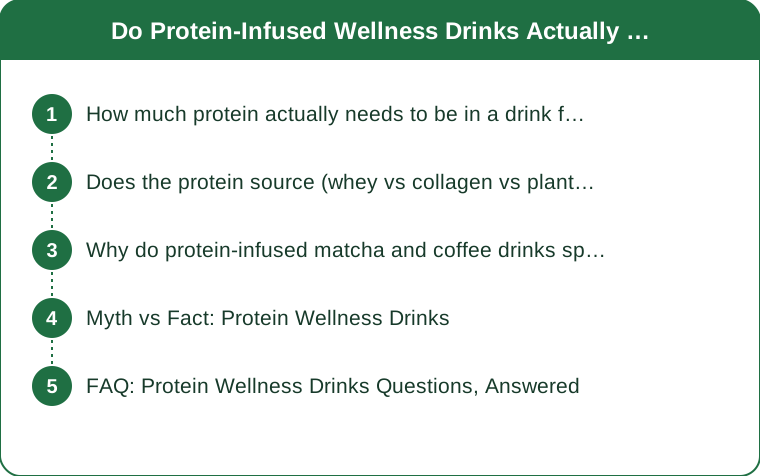
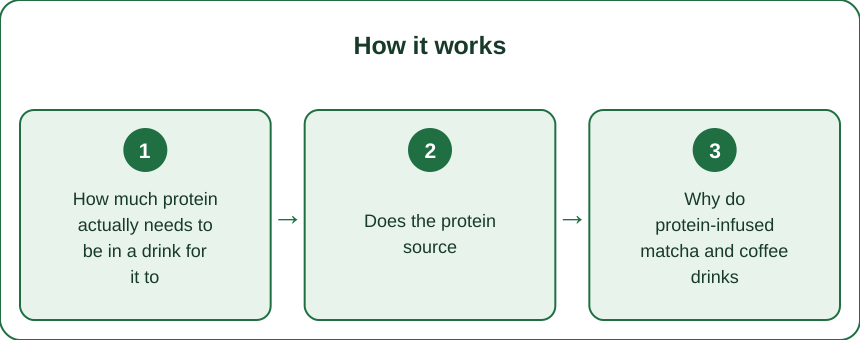
How much protein actually needs to be in a drink for it to meaningfully count toward daily intake?
Most nutrition guidance suggests 20-30 grams per serving is a meaningful contribution toward daily protein needs, similar to a typical meal’s worth — drinks with only 5-10 grams can still be useful as a small boost, but shouldn’t be relied on as a primary protein source the way marketing sometimes implies.
Does the protein source (whey vs collagen vs plant-based) actually matter?
Yes, meaningfully — whey protein is a complete protein with all essential amino acids and mixes well into drinks, while collagen protein, despite being popular in wellness drinks, is not a complete protein and is better understood as supporting skin and joint health rather than muscle-building needs. Plant-based options (pea, soy protein blends) can be complete proteins but often require blending multiple sources to match whey’s amino acid profile.

Why do protein-infused matcha and coffee drinks specifically raise questions?
Adding protein powder to a hot beverage can affect both taste and protein structure — some protein sources denature or clump when mixed with hot liquid, which is why well-formulated protein coffee and matcha products use specific protein types (often micellar casein or specially processed whey) that hold up better to heat, while poorly formulated versions can taste chalky or separate.
Myth vs Fact: Protein Wellness Drinks
Myth: Any drink with ‘protein’ on the label meaningfully supports fitness goals. Fact: Grams per serving and protein completeness vary enormously — check the nutrition label, not just the front-of-bottle claim. Myth: Protein drinks are a good replacement for whole-food protein sources long-term. Fact: They’re a convenient supplement to whole foods, not a replacement — whole food sources typically bring additional nutrients (fiber, micronutrients) that isolated protein drinks don’t.
FAQ: Protein Wellness Drinks Questions, Answered
Are protein waters actually different from protein shakes nutritionally?
Mainly in texture and typical protein amount — protein waters are usually lighter, clearer, and lower in protein (often 10-15 grams) compared to protein shakes, which often deliver 20-30+ grams and more calories from added ingredients.
Is added sugar a common issue in protein-infused wellness drinks?
It can be — some brands add significant sugar to improve taste, which somewhat undercuts the ‘wellness’ positioning, so checking the sugar content alongside the protein amount is worth the extra ten seconds of label reading.
Can protein-infused drinks replace a post-workout protein shake?
If they deliver 20+ grams of a complete protein source, reasonably yes — if they’re on the lower end (5-10 grams), they’re better treated as a between-meal boost rather than a full post-workout recovery drink.
TL;DR:
- Meaningful protein contribution starts around 20-30 grams per serving, not just any amount on the label
- Whey and complete plant-based blends outperform collagen for muscle-building protein needs
- Hot protein drinks (coffee, matcha) need specific heat-stable protein types to avoid clumping or bad texture
- Check grams and protein source on the nutrition label rather than trusting front-of-bottle marketing The protein-drink trend isn’t pure hype, but it isn’t uniformly legitimate either — the label tells you which one you’re actually holding.
Keep Reading
This article is for general informational purposes only and is not medical advice. Always consult a qualified health professional for guidance specific to you.