Do Warm Wellness Drinks Actually Do Anything Cold Ones Do Not?
Quick Answer: Some differences are genuine and some are marketing. Real: warm liquids are more soothing for a sore throat, warmth aids relaxation before sleep, hot water extracts more from herbs and spices, and people simply drink more warm fluid in cold weather - which is the biggest practical benefit of all. Not real: hot drinks do not detoxify, do not meaningfully boost metabolism, and do not burn fat. Choose warm in autumn because it improves hydration and comfort, not because of a metabolic claim.
Here is what holds up and what does not.

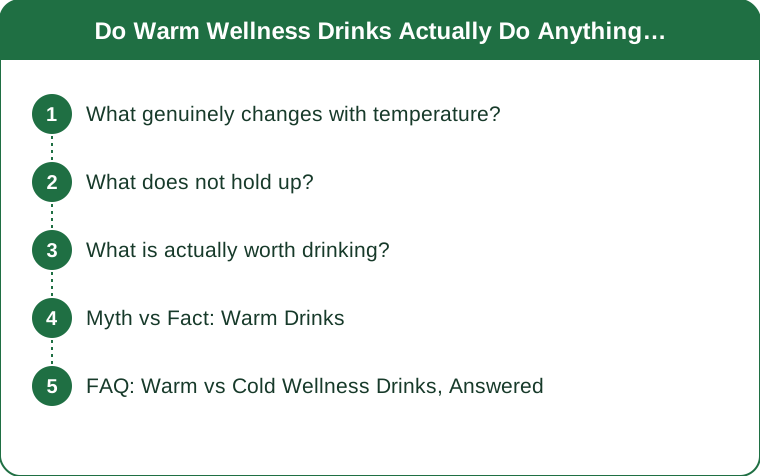
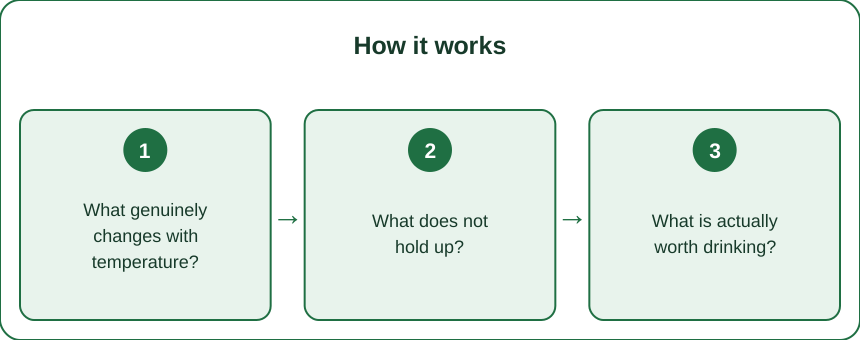
What genuinely changes with temperature?
Extraction changes substantially. Hot water pulls considerably more of the soluble compounds out of herbs, roots, and spices than cold water does, which is a real chemical difference rather than a preference.
Throat comfort is real. Warm liquids soothe irritated throat tissue, which is why the traditional hot drink for a cold persists - it addresses symptoms rather than causes, but it genuinely does that.
Warmth supports pre-sleep relaxation. A warm drink before bed contributes to the drop in core temperature that follows, which is part of the normal process of falling asleep.
And people drink more warm fluid in cold weather. This is the largest genuine benefit and the least discussed - thirst is blunted in cold weather, and a warm drink you actually want is worth more than a cold one you skip.
Digestive comfort is reported by many people with warm drinks, particularly first thing. The evidence is limited but the subjective effect is common enough to be worth noting.
Absorption speed differs slightly, with very cold liquids leaving the stomach marginally more slowly. The practical significance is small.
What does not hold up?
Hot water does not detoxify anything. Your liver and kidneys handle that, and no drink temperature changes their function. Detox framing on a warm drink is marketing.
The metabolic effect is negligible. Cold drinks require slightly more energy to warm to body temperature, but the amounts involved are trivial - a few calories - and warm drinks have no comparable claim in the other direction.
Hot lemon water is not alkalising. Blood pH is tightly regulated regardless of what you drink, and the claim misunderstands basic physiology.
Warm drinks do not burn fat. No temperature of beverage produces meaningful fat loss, and drinks marketed on this basis rely on the caffeine content if they contain any.
Very hot drinks are not harmless, either. Drinking liquids at very high temperatures has been associated with increased oesophageal risk, so letting a drink cool to comfortable is genuinely sensible.
And warm does not mean caffeine free. People switch to hot drinks in autumn and unintentionally increase caffeine intake, which then affects sleep - worth watching if evenings get harder in October.

What is actually worth drinking?
Ginger in hot water is a good use of the extraction effect. Grated fresh ginger releases more of its active compounds in hot water, and it is a well-tolerated option for digestive comfort.
Turmeric with black pepper and a fat source. Curcumin absorption is substantially improved by piperine in black pepper, and it is fat soluble - so warm milk or a plant milk works better than water alone.
Peppermint tea for digestive comfort after meals, which is one of the better-supported traditional uses.
Chamomile in the evening. The evidence for sleep effects is modest, but the routine of a warm caffeine-free drink before bed is genuinely useful regardless of the herb.
Warm lemon water is fine - just not magic. It is pleasant, hydrating, and provides a little vitamin C. That is the whole claim, and it is enough.
Broth deserves more attention than it gets. Warm, savoury, hydrating, and containing sodium that helps fluid retention - it is arguably the most useful warm drink in cold weather and it is rarely marketed as one.
And simple hot water counts. If it gets you to drink more fluid in cold weather, it is doing the main job. This is general information, not medical advice.
Myth vs Fact: Warm Drinks
Myth: Hot water flushes toxins from the body. Fact: Your liver and kidneys do that, and no beverage temperature affects their function.
Myth: Cold drinks slow your metabolism. Fact: If anything the opposite, very slightly - warming a cold drink costs a few calories. Neither effect matters practically.
Myth: Hot lemon water alkalises the body. Fact: Blood pH is tightly regulated and is not influenced by diet in this way. The claim misunderstands the physiology.
Myth: Warm drinks are always better for digestion. Fact: Many people report it and evidence is limited. If warm drinks suit you, that is a good enough reason - just not a universal rule.
Myth: Herbal means caffeine free. Fact: Not always - green tea, matcha, and yerba mate all contain caffeine. Check before making it your evening drink.
Myth: Hotter is better. Fact: Very hot liquids have been associated with increased oesophageal risk. Letting a drink cool to comfortably warm is the sensible default.
FAQ: Warm vs Cold Wellness Drinks, Answered
Are warm drinks genuinely better in autumn?
In practice yes, mainly because people drink more warm fluid in cold weather when thirst is blunted. That hydration benefit is larger than any of the metabolic claims.
Do hot drinks detox the body?
No. Your liver and kidneys handle that, and no drink temperature changes how they work.
Does temperature change how much I get from herbs?
Yes - this one is real. Hot water extracts considerably more soluble compounds from herbs, roots, and spices than cold water does.
What is the best warm drink for digestion?
Ginger or peppermint are the traditional choices, and peppermint after meals has reasonable support. Individual response varies considerably.
How should I take turmeric?
With black pepper and a fat source - piperine substantially improves curcumin absorption, and curcumin is fat soluble, so warm milk works better than water.
Can a warm drink help me sleep?
It can support the pre-sleep routine and the core temperature drop that follows. Make sure it is caffeine free - switching to hot drinks in autumn often raises caffeine intake unintentionally.
Is very hot better?
No. Very hot liquids have been associated with increased oesophageal risk, so let drinks cool to comfortably warm. This is general information, not medical advice.
TL;DR:
- Real benefits: better extraction from herbs, throat soothing, pre-sleep relaxation, and - most importantly - you drink more fluid when it is warm.
- Not real: detox, metabolism boost, fat burning, alkalising. All marketing.
- Hot water genuinely extracts more from ginger, turmeric, and spices than cold does.
- Turmeric needs black pepper and a fat source to absorb properly.
- Broth is underrated - warm, hydrating, and the sodium helps fluid retention.
- Watch the caffeine. Switching to hot drinks in autumn often raises intake without you noticing.
- Let it cool to comfortably warm. Very hot liquids carry their own risk.
Choose warm because you will actually drink it. That is the benefit that matters. This is general information, not medical advice.
Keep Reading
This article is for general informational purposes only and is not medical advice. Always consult a qualified health professional for guidance specific to you.