Why Your Bottle Makes Every Drink Taste Like Last Week's
Quick Answer: Flavour ghosting happens because oil-soluble aroma compounds bond to plastic and silicone, which are both porous at a microscopic level and oleophilic. A normal wash removes what is water-soluble and leaves the rest. The fix: a bicarbonate of soda soak for general ghosting, white vinegar for mineral and dairy notes, and replacing the silicone seal, which holds more residue than the bottle itself.
Plain water.
Tastes of coffee, then mango, then something you cannot identify.
The bottle looks perfectly clean. It is not.

Why do flavours stick to some bottles and not others?
It comes down to the material, and the difference is stark.
Plastic is the worst offender. Polymers have microscopic surface irregularities that trap residue, and many aroma compounds are oil-soluble and lipophilic — they bond readily to plastic and are not lifted by water and a quick rinse. Scratches from brushes and cutlery increase the surface area and give residue more places to sit, which is why an old bottle ghosts worse than a new one.
Silicone is porous and holds odour aggressively. The seal in your lid is a small part of the bottle and often the largest source of the problem. It is soft, oil-absorbing, and it lives in the warm damp environment under a closed lid.
Stainless steel is far more resistant — non-porous and largely inert. Steel bottles that smell almost always have the problem in the lid, gasket or straw, not the body. Check there first and you will usually find it immediately.
Glass is essentially immune. Non-porous and unreactive. If you make strong-flavoured drinks daily and hate ghosting, glass with a silicone sleeve for protection is the honest answer.
And which drinks cause it most? Anything with fat or strong aromatics: coffee, matcha lattes with milk, protein shakes, smoothies with nut butter, citrus and mint, and anything with turmeric — which stains as well as scents.
What actually removes bonded residue?
Five methods, matched to what you are removing.
Bicarbonate of soda soak for general ghosting. Two tablespoons in warm water, fill the bottle, soak overnight, scrub and rinse. Bicarbonate is mildly alkaline and neutralises acidic odour compounds, and this handles most everyday cases.
White vinegar for mineral deposits and dairy notes. Half vinegar, half warm water, soak 30 minutes, rinse thoroughly. Vinegar is acidic and dissolves mineral scale that traps residue. Do not combine it with bicarbonate — they neutralise each other and you get fizzing and nothing else.
Denture or effervescent cleaning tablets. Genuinely effective, designed for exactly this material problem, and they reach into places brushes cannot.
Hot water and washing-up liquid, but properly. Very hot water plus a degreasing detergent, with a brush that reaches the base corner. Most ghosting survives because the wash was lukewarm and quick, not because the method was wrong.
And sunlight for stubborn plastic. A day in direct sun after cleaning helps break down residual compounds. It is slow, free, and works better than it has any right to.
What not to use: bleach on silicone (it degrades it and the smell persists), abrasive scourers on plastic (scratches make it worse permanently), and the dishwasher for anything with a printed exterior or a manufacturer warning against it.
How do you stop it happening again?
Five habits, and the first two do most of the work.
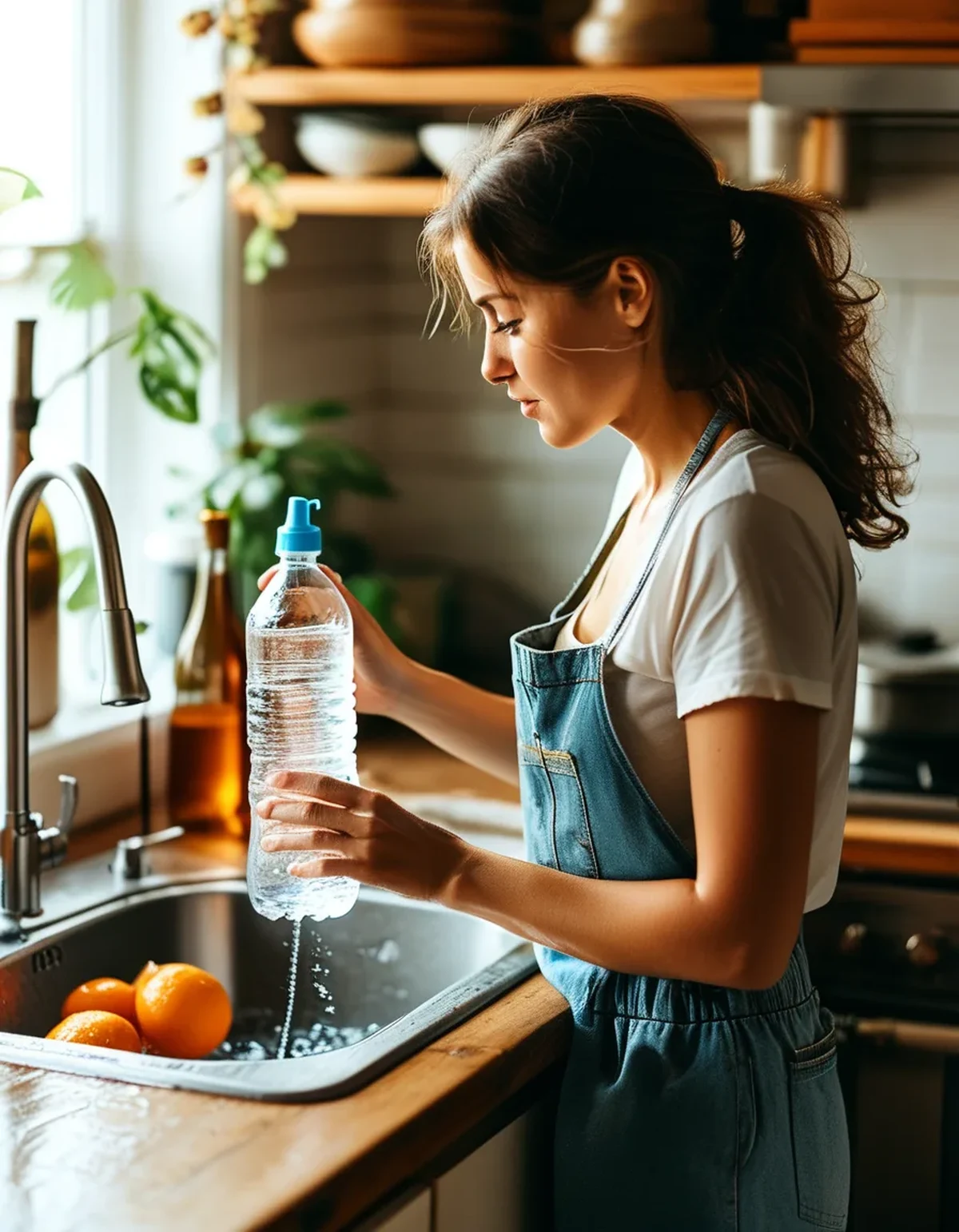
Rinse immediately after use, every time. Residue that has never dried on is trivial to remove. Residue that sat in a bag for six hours has already bonded. Thirty seconds of rinsing beats an hour of soaking later.
Take the lid apart and dry it open. The gasket, the straw and the threads are where it lives. Disassemble, rinse, and leave everything separated to air dry. A lid stored closed and damp is a bacteria and odour factory.
Dedicate bottles to drink types. One for water, one for coffee and shakes. It sounds excessive and it eliminates the problem entirely, which nothing else quite does.
Replace the silicone seal annually. Seals are cheap, widely available, and after a year of daily use they hold more residue than they will ever release. If you do one thing on this list, do this one — it is the single most common fix for a bottle people were about to throw out.
And deep clean weekly rather than heroically. A ten-minute bicarbonate soak once a week prevents the buildup that eventually needs an overnight rescue.
Myth vs Fact: Bottle Cleaning
Myth: if it smells clean it is clean. Fact: odour and residue are different things. Bonded flavour compounds can be odourless in air and obvious in water.
Myth: the dishwasher handles everything. Fact: dishwashers clean surfaces well and often do not reach inside narrow bottles, straws or under gaskets. The lid is the part that needs hand attention, and it is the part people put in the dishwasher and consider done.
Myth: bicarbonate and vinegar together are a power combination. Fact: they neutralise each other. Use one or the other, and rinse between.
Myth: stainless steel bottles do not hold flavour. Fact: the body largely does not. The lid, gasket and straw absolutely do.
Myth: bleach is the strongest option so it must be best. Fact: bleach degrades silicone, can leave its own persistent smell, and does nothing extra for oil-bonded aroma compounds. Bicarbonate outperforms it here.
Myth: a smelly bottle needs replacing. Fact: usually it needs a new gasket, which costs a fraction of a bottle and fixes the problem completely.
FAQ: Bottle Flavour Questions, Answered
Why does my water taste like coffee days later?
Oil-soluble aroma compounds from coffee bond to plastic and silicone and survive rinsing. The gasket is usually the main reservoir.
What’s the fastest fix?
Overnight bicarbonate of soda soak, two tablespoons in warm water, then scrub and rinse.
Can I use bleach?
Not recommended on silicone — it degrades the material and can leave a lingering smell of its own.
Should I use vinegar or bicarbonate?
Vinegar for mineral scale and dairy notes, bicarbonate for general flavour ghosting. Never together.
How often should I replace the seal?
Annually with daily use, or as soon as it looks discoloured or stays smelly after a proper clean.
Are steel bottles better than plastic?
For flavour retention, considerably. The body is essentially inert — but the lid still needs the same attention.
Is a smelly bottle unsafe?
Persistent smell can indicate bacterial or mould growth, particularly in a lid stored damp. Deep clean it, dry it disassembled, and replace the gasket — and if visible mould keeps returning, replace the lid.
TL;DR:
- Flavour ghosting is oil-soluble compounds bonding to plastic and silicone — a normal rinse cannot lift them.
- Bicarbonate soak overnight for general ghosting; vinegar for mineral and dairy notes; never both together.
- The gasket holds more residue than the bottle — replace it annually and check it first on steel bottles.
- Rinse immediately and dry the lid disassembled. Residue that never dries on never bonds.
- Dedicate one bottle to water and another to flavoured drinks if you want the problem gone entirely.
Take your lid apart tonight. Whatever you find under the seal is the answer to the question.
Keep Reading
This article is for general informational purposes only and is not medical advice. Always consult a qualified health professional for guidance specific to you.