The Warm Drink Transition - Swapping Your Summer Routine Without Losing It
Quick Answer: Most functional ingredients work the same warm or cold, but heat changes extraction, taste, and in a few cases stability. Swap the format rather than the contents - the same ginger, citrus, protein, or tea works warm with small adjustments to temperature and order. Do not boil what you would not boil. And expect to drink less volume, so make it count.
The iced routine did not stop working.
It stopped being appealing, which for a daily habit amounts to the same thing.

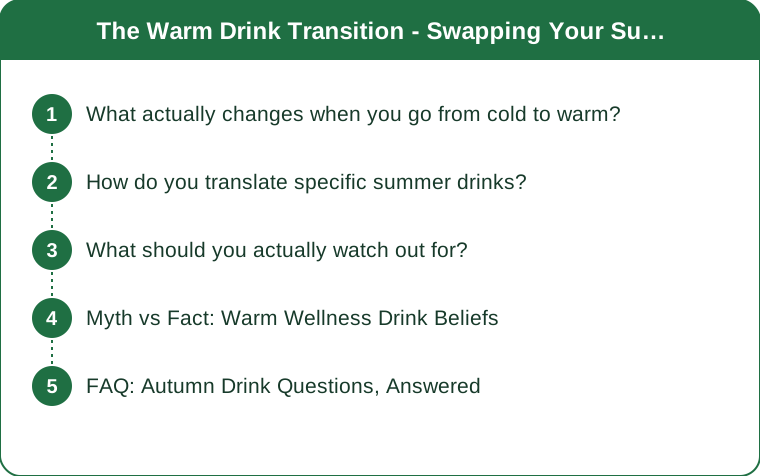
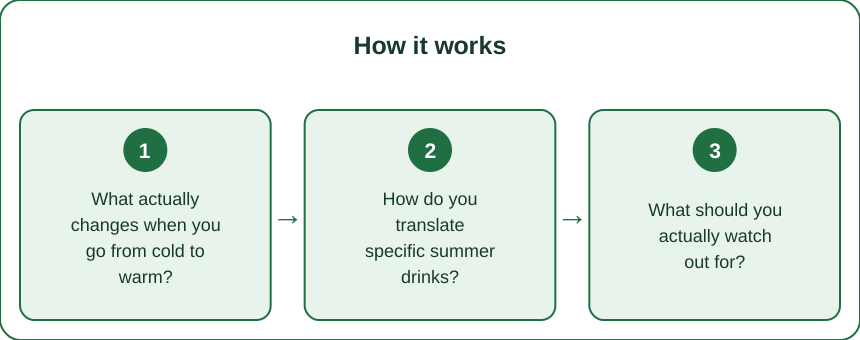
What actually changes when you go from cold to warm?
Three things, and only one of them requires care.
Extraction speeds up dramatically. Compounds that take hours to infuse cold come out in minutes in hot water, which is why cold brew and hot brew of the same tea taste so different. Same ingredients, different balance - warm versions are typically stronger and more bitter at the same ratio.
Taste perception shifts with temperature. Warmth amplifies aroma and reduces perceived sweetness, so a drink calibrated for iced will taste sharper and less sweet warm. You will need less sweetener than you expect, and more aromatic ingredients.
Some ingredients do not like high heat. Delicate compounds in some ingredients degrade with boiling water, and protein powders can turn grainy or clump. This is the one genuine constraint and it is easily worked around with temperature control.
Volume drops considerably. People drink far more iced liquid than hot, so a routine that delivered a litre in summer might deliver three hundred millilitres in autumn. Total fluid intake often falls in autumn without anyone noticing, which matters more than the ingredients do.
And the timing usually shifts. Iced drinks belong to afternoons; warm drinks belong to mornings and evenings. The habit moves in the day, which means the caffeine content needs rethinking if the drink moves later.
The good news is that most ingredients transfer directly. Ginger, citrus, turmeric, cinnamon, most teas, and most protein sources all work warm. Format change, not ingredient change, is the right frame.
How do you translate specific summer drinks?
Six common swaps, with the adjustment that makes each one work.
Iced green tea to hot green tea: drop the water temperature. Green tea brewed with boiling water is bitter and astringent, which is why the iced version tastes so much smoother. Let boiling water sit for a few minutes before pouring, and steep for less time.
Citrus and mint water to warm lemon and ginger. The same brightening effect, with ginger replacing mint as the aromatic. Add the lemon after the water has cooled slightly - very hot water flattens fresh citrus aroma.
Cold brew coffee to a warm spiced coffee. The main adjustment is that hot brewing extracts more acidity and bitterness. A slightly coarser grind and a shorter brew brings it closer to the cold brew profile people got used to.
Protein shake to a warm protein drink: never boiling. Add warm rather than hot liquid, mix thoroughly, and expect a different texture. Whisk the powder into a small amount of warm liquid first, then top up - this prevents almost all clumping.
Electrolyte drink to a warm broth. Broth delivers sodium and fluid in a form that is far more appealing in cool weather. This is the most natural swap on the list and the most overlooked.
Turmeric iced latte to golden milk. Direct translation, and warmth actually suits the spice profile better. Add a little fat and black pepper, both of which are traditionally used with turmeric.

What should you actually watch out for?
Four things, mostly about habits rather than chemistry.
Total fluid intake usually falls. Cool weather suppresses thirst, and warm drinks are consumed in smaller volumes. Keep a water glass alongside the warm drink rather than treating the mug as the whole intake.
Caffeine timing shifts and creeps. A drink that lived at three in the afternoon as iced tea can become a six o’clock warm drink out of comfort. Caffeine has a long half-life and an evening warm drink is a common reason autumn sleep degrades.
Sugar creeps up in warm drinks. Warmth suppresses perceived sweetness, so people add more, and spiced warm drinks tend to be sweeter by convention. Taste before adding, not while pouring.
Very hot drinks are worth letting cool. There is reasonable evidence that habitually consuming drinks at very high temperatures is not ideal for the oesophagus. Letting a drink cool for a few minutes is a simple habit worth having.
And check interactions if you take supplements or medication. Tea with meals can affect iron absorption, and some herbal ingredients interact with medications. Worth a word with a pharmacist if you take anything regularly. This is general information, not medical advice.
The overall point is continuity. A daily habit that survives the season change is worth far more than a perfect summer routine that ends in October. Translate it rather than dropping it.
Myth vs Fact: Warm Wellness Drink Beliefs
Myth: hot water destroys the benefits of most ingredients. Fact: most common ingredients handle warm water perfectly well; a few delicate ones prefer lower temperatures. Temperature control solves it, and boiling is rarely required.
Myth: warm lemon water in the morning detoxifies you. Fact: your liver and kidneys handle that continuously and do not need assistance from a drink. It is a pleasant, hydrating way to start the day, which is a good enough reason on its own.
Myth: warm drinks are automatically more hydrating. Fact: hydration depends on volume and content, and people typically drink less volume when it is hot. Warm drinks often hydrate less simply because you have less of them.
Myth: herbal means caffeine-free. Fact: several popular herbal blends contain caffeine or stimulant ingredients, and matcha and yerba mate contain plenty. Check the label before making it an evening drink.
Myth: adding honey to hot tea ruins it. Fact: very hot liquid may affect some delicate compounds in raw honey, but the practical difference for taste and benefit is small. Let it cool for a minute if it concerns you.
Myth: you need to change all your ingredients for autumn. Fact: the format is what needs to change - most ingredients work year round. Swapping the drink, not the shopping list, is the efficient move.
FAQ: Autumn Drink Questions, Answered
Can I use my usual protein powder in a warm drink?
Yes, with warm rather than boiling liquid and a proper mix. Make a paste with a little liquid first, then top up - that prevents nearly all the clumping people complain about.
Will I get less fluid overall in autumn?
Most people do, because thirst drops in cool weather and warm drinks come in smaller servings. Keep water alongside rather than assuming the mug covers it.
Is there a best time for a warm wellness drink?
Morning for anything caffeinated, evening for anything you want to be calming. The main thing to avoid is letting a caffeinated afternoon habit drift into the evening as the weather cools.
TL;DR:
- Most ingredients transfer directly - change the format, not the shopping list.
- Heat speeds extraction and reduces perceived sweetness, so use less time, less sweetener, cooler water.
- Never use boiling liquid with protein powder - warm liquid, mixed to a paste first.
- Total fluid intake drops in autumn because thirst falls and warm servings are smaller.
- Watch caffeine drifting later as an afternoon iced habit becomes an evening warm one.
Take your favourite summer drink and rebuild it warm this week with slightly less sweetener. Same habit, same ingredients, and it survives to March.
Keep Reading
This article is for general informational purposes only and is not medical advice. Always consult a qualified health professional for guidance specific to you.